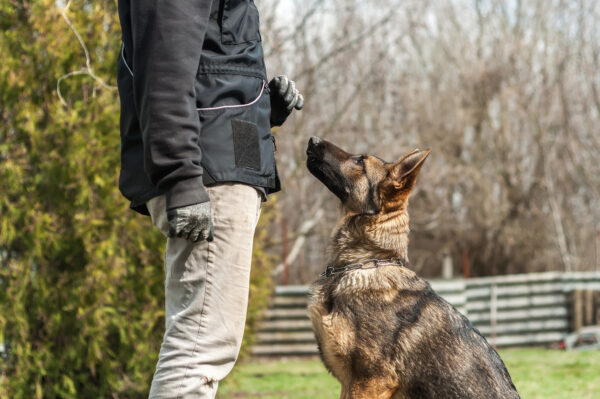
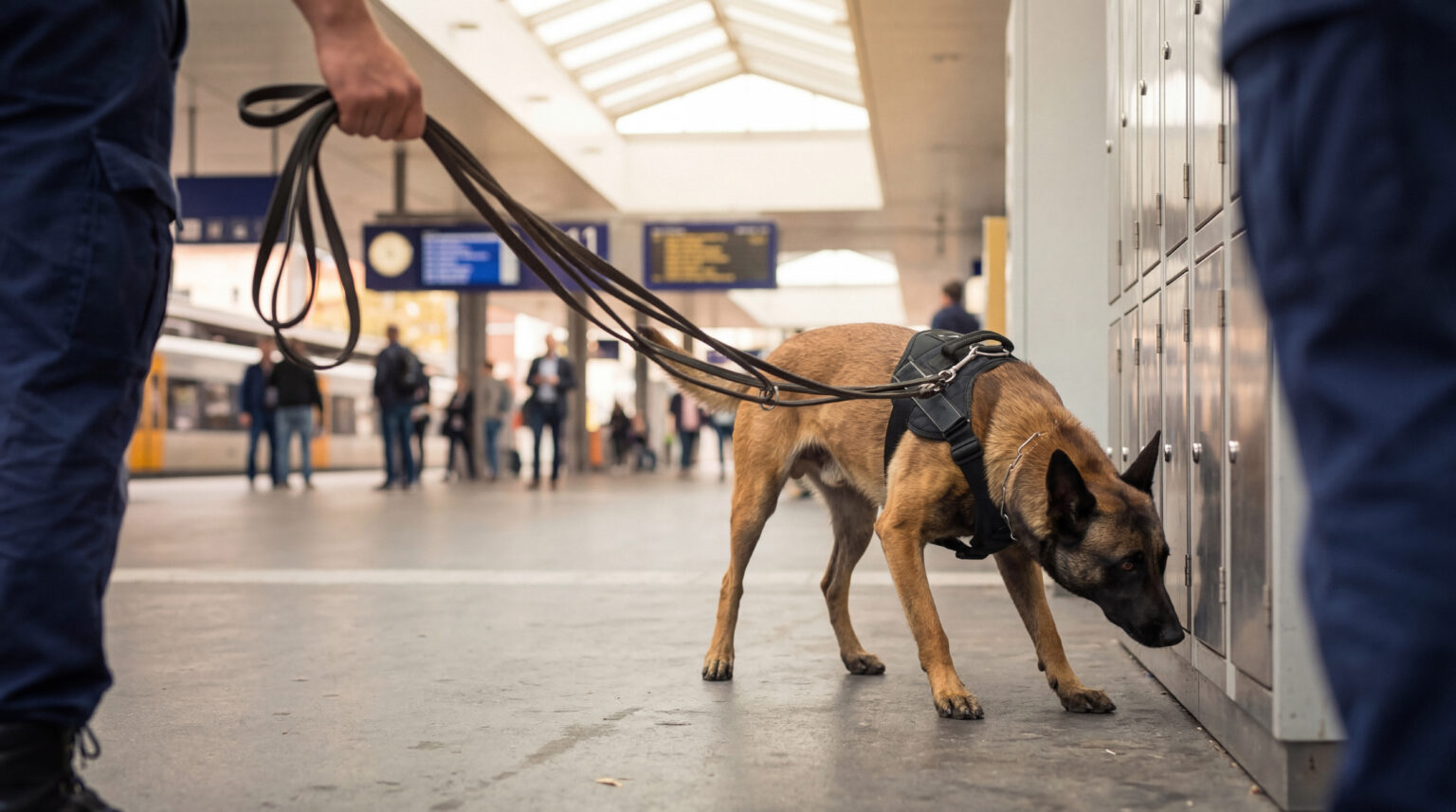
A trained detection dog is not a pet with a job. It is a mobile chemical sensor with a decade of service life and a nose that outperforms most laboratory instruments in the field. No technology yet built can move through a cluttered, chaotic environment and pinpoint a few molecules of a target substance sealed inside a container, buried underground, or packed behind a vehicle panel.
The Science
The gap between a human nose and a dog's is architectural, not incremental. Humans have around five million olfactory receptors; dogs have 200 to 300 million, and the brain region that processes scent is proportionally some forty times larger. Dogs exhale through the side slits of the nostrils so their own breath doesn't disturb the sample, and each nostril reports somewhat independently — which is how a dog determines the direction of an odour, not just its presence.
Sensitivity is only half of it. Where a human smells "bakery," a dog resolves yeast, butter, hot metal, mop water, and the person who walked through twenty minutes ago as separate signals. That ability to segment an odour field is what makes detection work possible. A substance wrapped in plastic, packed in coffee, and sealed in a drum still emits volatile compounds through every seam.
Handlers think of scent as a fluid: a plume dispersing downwind in a widening, turbulent cone shaped by airflow, heat, and humidity. This is why a good dog often alerts several metres from the hide and then works back up the concentration gradient to the source - and why a competent handler manages air movement deliberately rather than just walking the dog past things.
Selecting the dog
Most dogs cannot do this work. They have the nose; they lack the temperament.
Selectors look for hunt drive above all — the compulsive urge to keep searching until something is found, without prompting. Then toy or food obsession, because the reward is the entire payment system. Then environmental stability: indifference to slick floors, metal grating, crowds, darkness, and noise. Then physical soundness, verified by veterinary imaging rather than a look-over.
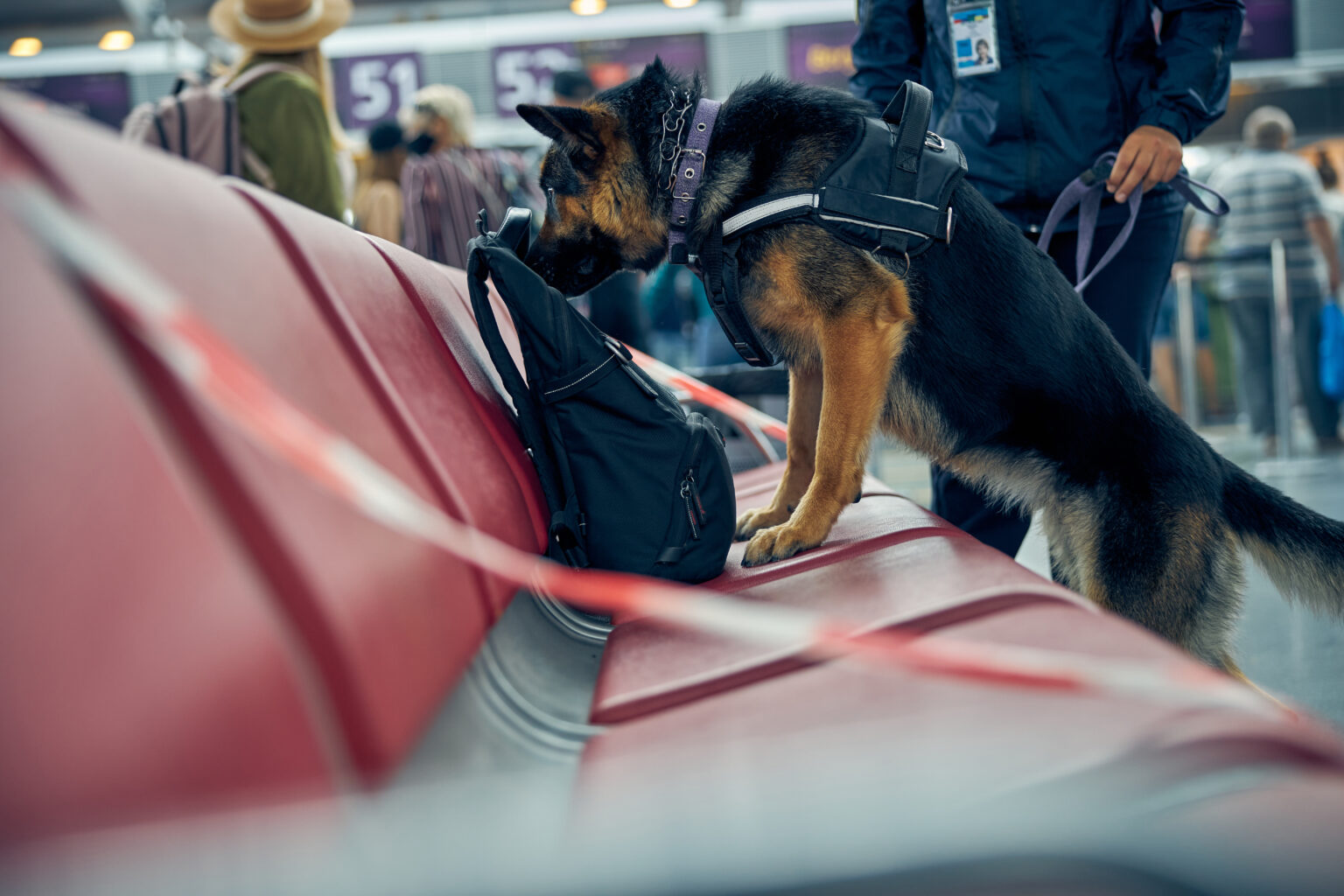
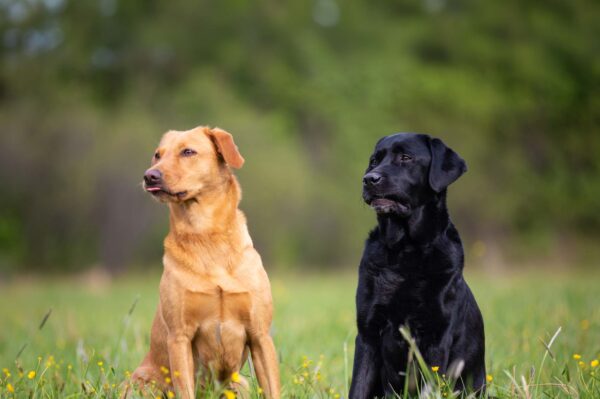
The Belgian Malinois and German Shepherd dominate dual-purpose patrol and detection roles. The Labrador is the default for public-facing single-purpose work - excellent nose, cooperative, and non-threatening in appearance, which matters in airports and schools. Springer Spaniels excel in confined searches of vehicles, aircraft, and luggage. Breed is a starting probability, never a guarantee.
How training works
The dog first learns that one object — a ball on a rope, a rolled towel — is the most valuable thing in existence. That becomes the currency.
Imprinting then links the target odour to that reward, usually via scent boxes or a scent wheel, until the dog is chasing the odour itself. Each additional substance is imprinted separately, then integrated.
The trained final response must be clear and repeatable. Explosives and passenger-facing work require a passive alert — sit or down at the source, and freeze. Some narcotics, SAR, and conservation work uses an active alert: scratching or barking. Either way, the response must point to the source, not vaguely at the vehicle.
Proofing is where weak programmes fail. The dog must find target odour in unfamiliar packaging, at bulk and residue quantities, at height and ground level, masked by fuel, coffee, ammonia, and perfume, in noise and poor light, for the length of a real search. Blank searches are essential: a dog that has never searched an empty room learns that every deployment ends in a find, and will eventually produce one.
The disciplines
Narcotics and explosives detection dominate security and customs work. Search and rescue splits into air-scenting, trailing from a scent article, and human remains detection. Conservation detection — invasive species, trafficked wildlife, agricultural pests — is the fastest-growing field. Medical detection dogs identify certain cancers, seizure onset, and hypoglycaemia. Others are trained on currency, tobacco, firearms residue, and the chemical compounds in electronic storage media.
What "99% accuracy" means
Under certification conditions — controlled environment, structured search, competent handler — good teams score in the high nineties. Those numbers are real, and they are the right benchmark for deployment readiness.
Field performance varies more, for understood reasons. The largest is handler cueing: dogs read human body language exceptionally well, and a handler who lingers at a suspect bag will very often get an alert on it. Serious programmes counter this with double-blind testing, where neither handler nor evaluator knows where the hides are. Detection is also a perishable skill — without documented maintenance training it degrades — and residual odour from a substance no longer present is not an error, but does complicate the statistics.
What to ask a provider
Before anything else: certification through a recognised body; training records that log misses and false alerts as well as finds; double-blind results you observe rather than receive; health screening; handler instruction included; and a live demonstration you design, in a room you choose, with a hide you place and a blank search included.
A good provider welcomes all six. That reaction tells you more than any statistic.
Elite K9 provides trained detection dogs, handler instruction, and ongoing maintenance training. Contact us to discuss your requirements.
RELATED POSTS
Working Line vs Show Line: Understanding the Critical Differences

Family Dogs from Working Lines: The Perfect Balance